


Our Components
ECO SHADES is built on high-end materials, precise production methods, and an approach where quality is visible in every detail. This page covers the parts that decide how a pair performs and how long it lasts: the lenses, the hinges, and the wirecores hidden inside the temples.
01 / Lenses
Lens Technology
Every ECO SHADES lens is made from the same material and held to the same standard. What changes from model to model is the tint category and the curve.
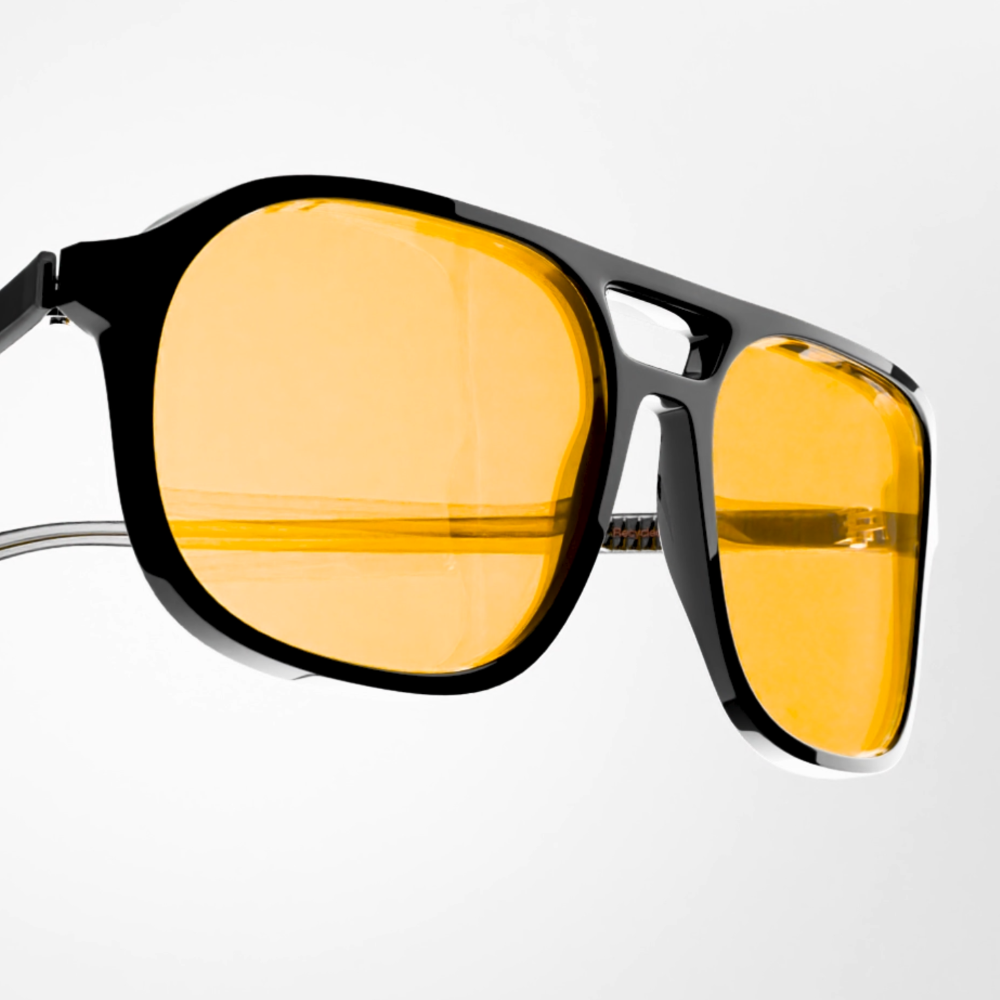
rPMMA
All our lenses are made from 100% recycled PMMA, an optical acrylic. It gives clear, distortion-free vision at a low weight, which is what keeps a frame comfortable over a full day rather than just the first hour.
Recycled does not mean second grade here. Every lens is tested and certified to international safety standards before it goes into a frame.
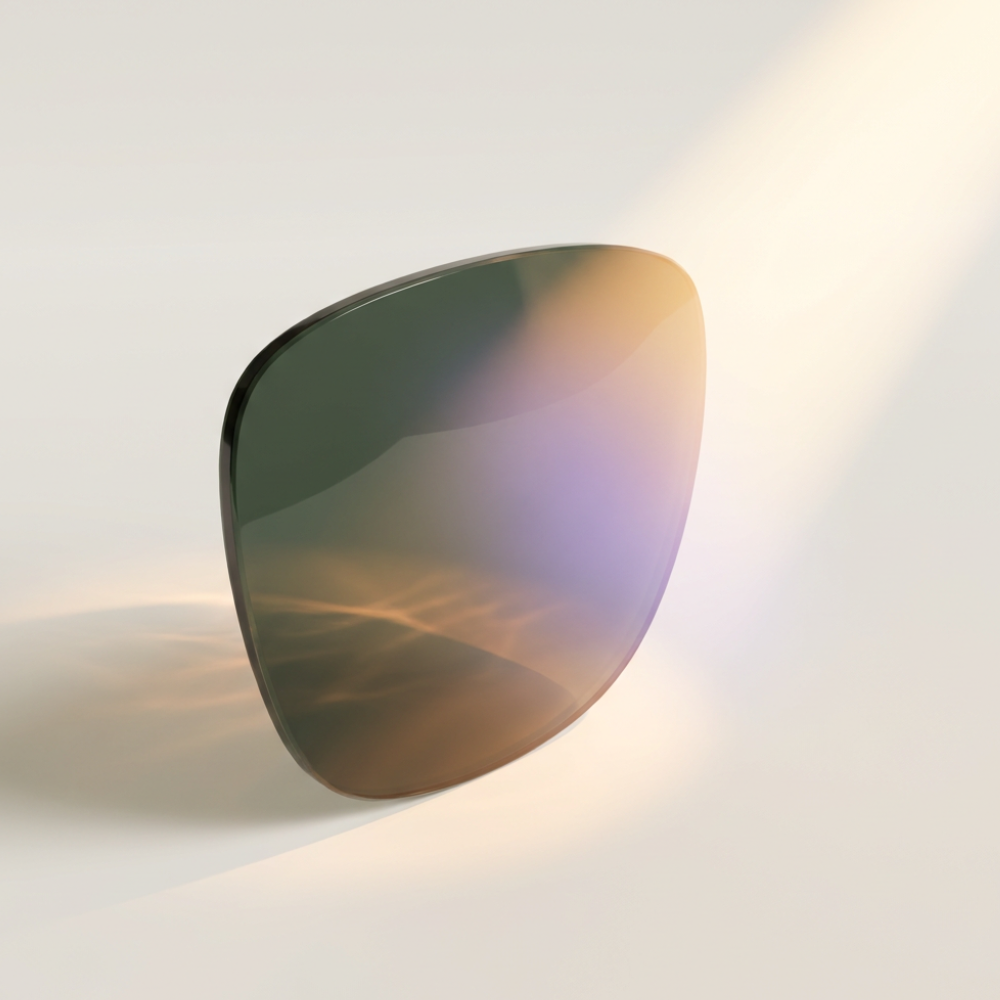
UV400 Protection
UV400 means the lens blocks every wavelength up to 400 nanometres. That covers 100% of UVA and UVB radiation, and it is the highest level in common use.
It is worth being clear about one thing: tint and protection are not the same. A dark lens is not automatically a safe one. Every ECO SHADES lens is UV400 regardless of how light or dark it looks.
Lens Category
Category describes how much visible light a lens lets through, graded 0 to 4 under the European standard. It tells you how dark the lens is, not how well it protects.
| Category | Light transmission | Conditions |
|---|---|---|
| 0 | 80 to 100% | Clear or very lightly tinted. Made for indoor use, evenings and overcast days. It gives no real glare reduction, though it can still carry full UV protection. |
| 1 | 43 to 80% | A light tint for low or changing light. Suited to cloudy days and early mornings, and often used where the eye should stay visible through the lens. |
| 2 | 18 to 43% | A medium tint for moderate sunlight. A good all-round choice in Northern Europe, where the light shifts through the day. |
| 3 | 8 to 18% | A dark tint for bright, direct sun. This is the standard for sunglasses and the right choice for summer, water and open coastline. |
| 4 | 3 to 8% | A very dark tint for extreme glare, such as high mountains and glaciers. Too dark for driving, and not permitted for it in the EU. |
The category for each model is listed on its product page.
Lens Base
The base number describes how curved the lens is. A low base is close to flat. A high base wraps around the face. It changes the look of the frame, how it sits, and how much light reaches your eyes from the side.
| Base | Profile | Character |
|---|---|---|
| 0 | Flat | No curve at all. A completely flat front, found on some vintage and rimless designs. |
| 2 | Near flat | A straight, classic front. Suits square and rectangular shapes and sits close to the brow. |
| 4 | Slight curve | The versatile middle ground, and the most common base in eyewear. Comfortable on most face shapes. |
| 5 | Moderate curve | A softer front with a little more coverage towards the edges of the lens. |
| 6 | Pronounced curve | Follows the face more closely and blocks more light coming in from the sides. |
| 8 | Full wrap | A sport profile with the widest coverage, built to stay close to the face during movement. |
The base for each model is listed on its product page.
02 / Hinges
Hinge Technology
The hinge is the part of a frame that gets used most, and it is usually the part that fails first.
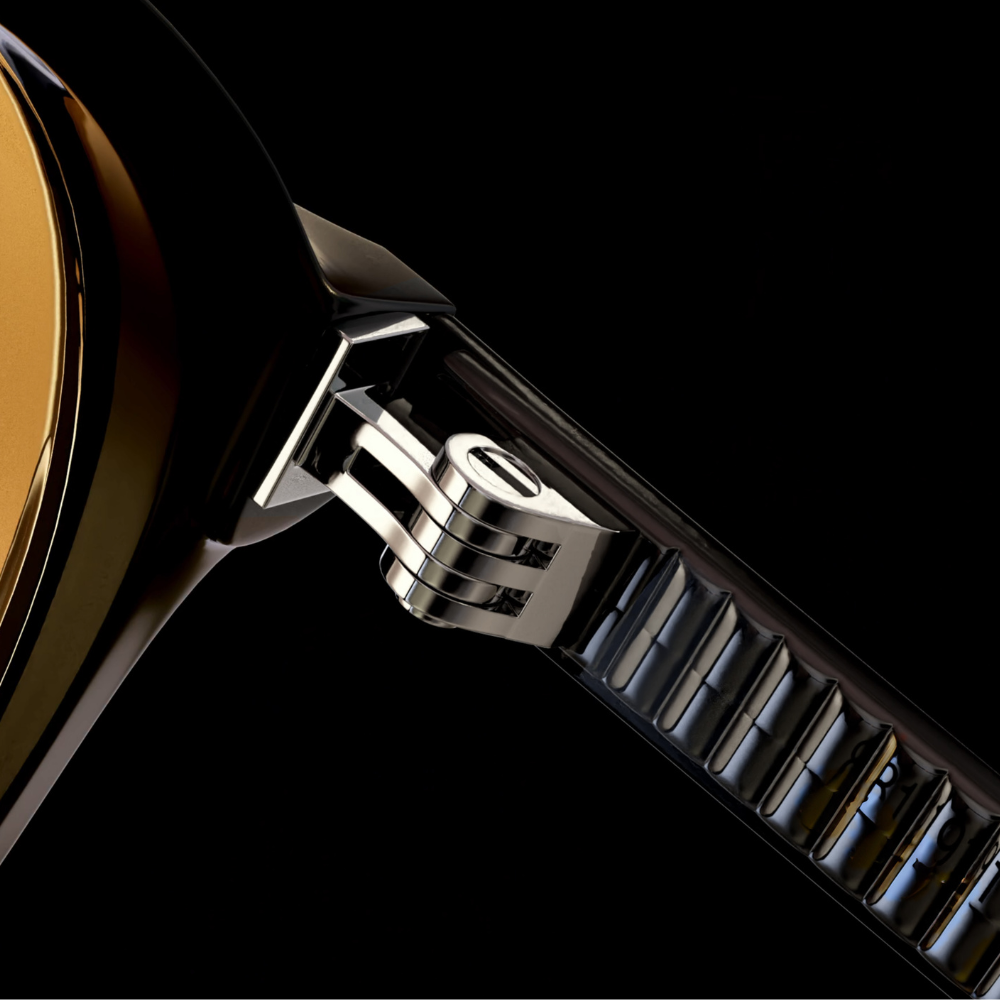
5-Barrel Optical Hinge
A barrel is one of the small interlocking cylinders that form the joint where the temple meets the front. Count them and you have the name of the hinge.
More barrels mean more contact surface. The load is spread more evenly, the joint holds its tension longer, and there is less side-to-side play as the frame is opened and closed day after day.
Five barrels is the standard used in premium prescription eyewear. Three is more common at our price point. We fit five to every ECO SHADES frame, because a hinge that loosens is the fastest way to make a good pair of sunglasses feel cheap.
The hinges themselves are copper, the same material used in high-end optical frames. It moves smoothly, adds strength, and holds up to being opened and closed every day.
Friction-Lock Screws
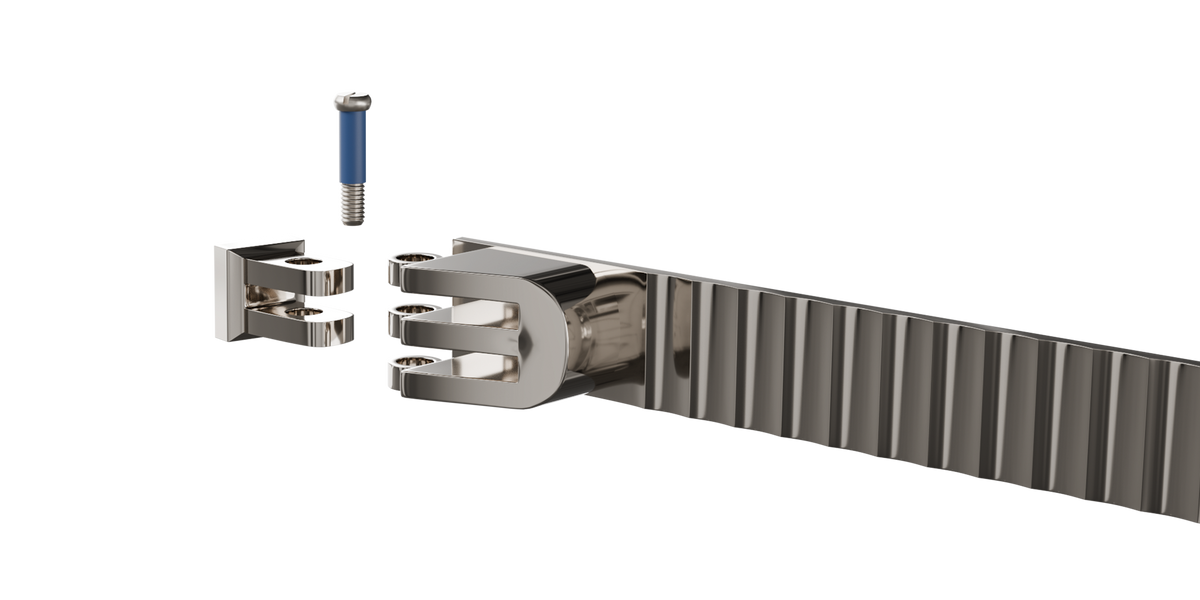
Every hinge screw carries a nylon patch that grips the thread. It stops the screw backing out over time, with no glue and nothing to reapply.
Serviceable by Design
Standard optical components mean any optician can tighten, adjust or service the frame. Nothing about it is proprietary or disposable.
03 / Wirecores
Wirecore Temples
A wirecore is a length of stainless steel running through the inside of each temple, hidden under the material. You never see it. It is one of the least visible parts of a frame and one of the most important to how long that frame lasts.
Why It Matters
Without a core, a temple has only the plastic itself to hold its shape. Worn daily, it slowly splays outward, loses its grip on the head, and once it has spread there is no reliable way to bring it back.
With a core, the temple holds whatever shape it is given. An optician can bend it to the width of your head and it stays there. That is what makes a frame adjustable, and it is what makes it serviceable years later, because heads are not standard and a fit that is right on day one often needs correcting further down the line.
We use standard stainless steel here rather than recycled. Recycled stainless is not yet consistent enough for a component this thin, which has to bend repeatedly without fatiguing. We would rather the part outlast the frame than add another line to the materials list.
From materials to micro-components, every element of an ECO SHADES frame is chosen for technical performance, comfort and durability. With occasional service, such as tightening a screw or adjusting the temples, a pair is built to stay reliable for years.